Skip to content
Cartografías de la invisibilidad: film still of three figures in a red interior


Cartografías 
de la invisibilidad


In 1948 Bruno Zevi published Saber ver la arquitectura (Architecture as Space; Zevi, 1981), a key work for understanding architecture as an autonomous discipline, distinct from the other figurative arts with which it is closely bound. What sets it apart, above all, is its capacity to produce space and its immediate proximity to construction technique, politics, humanism and social purpose, among others.

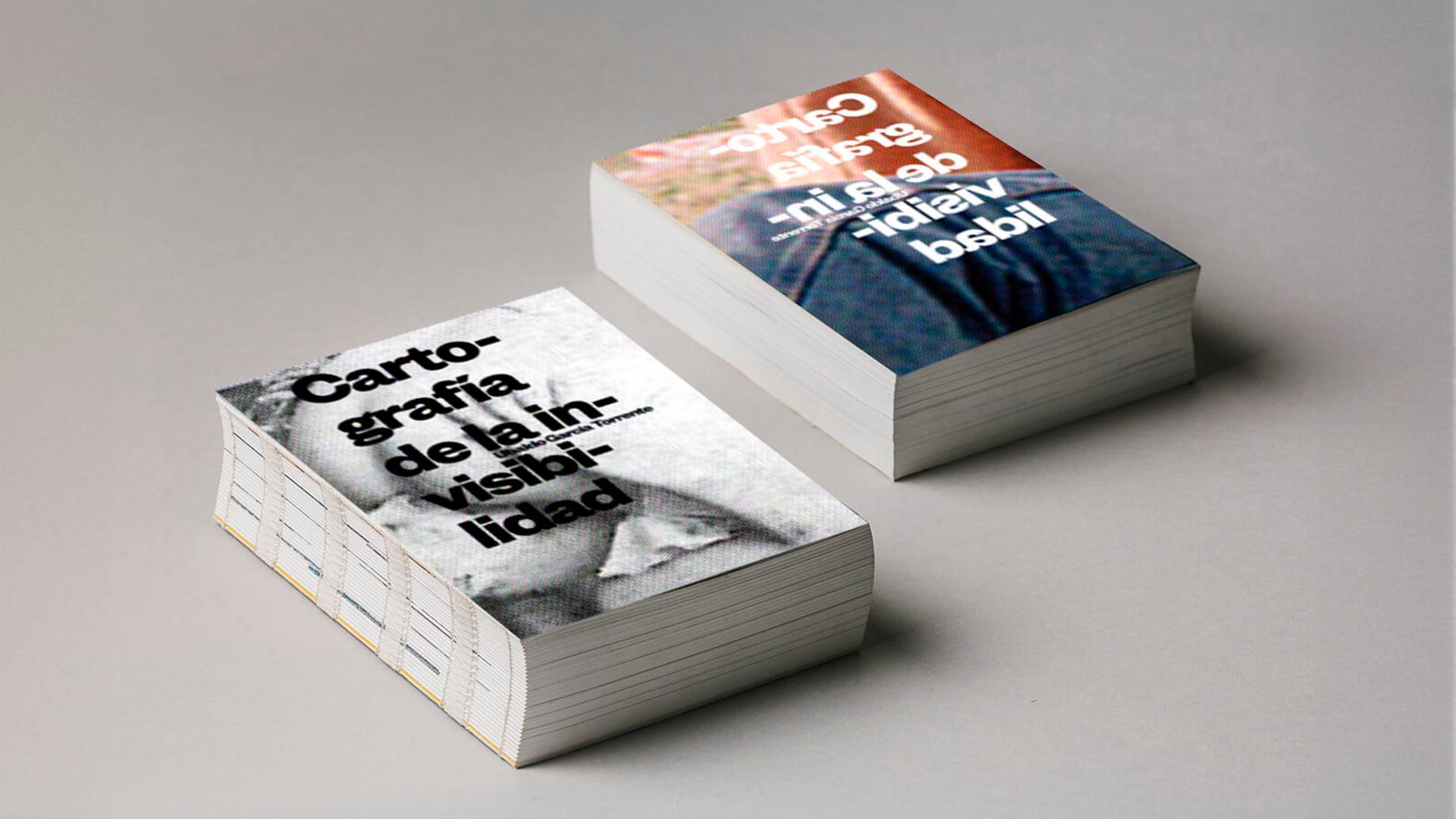
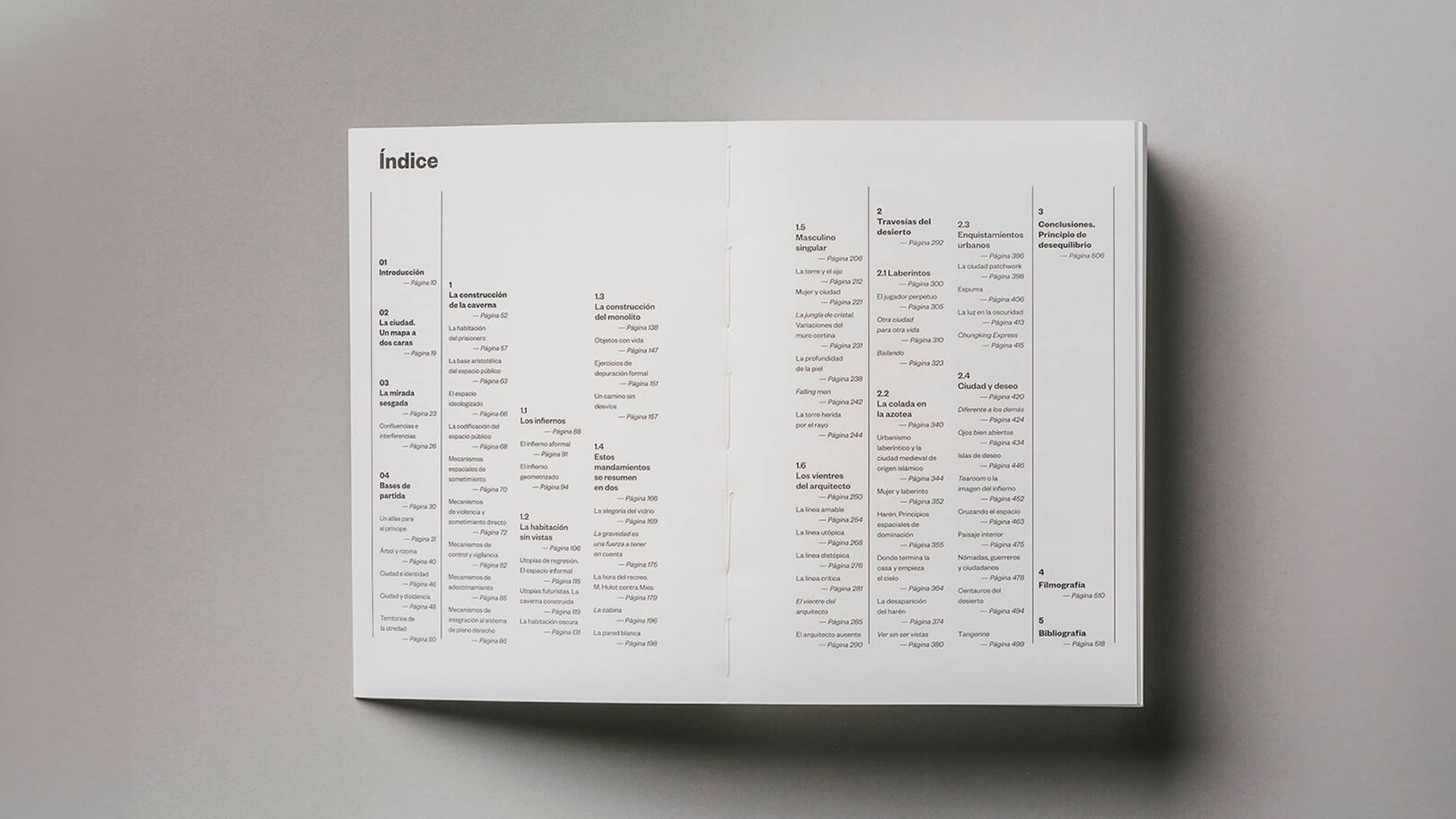
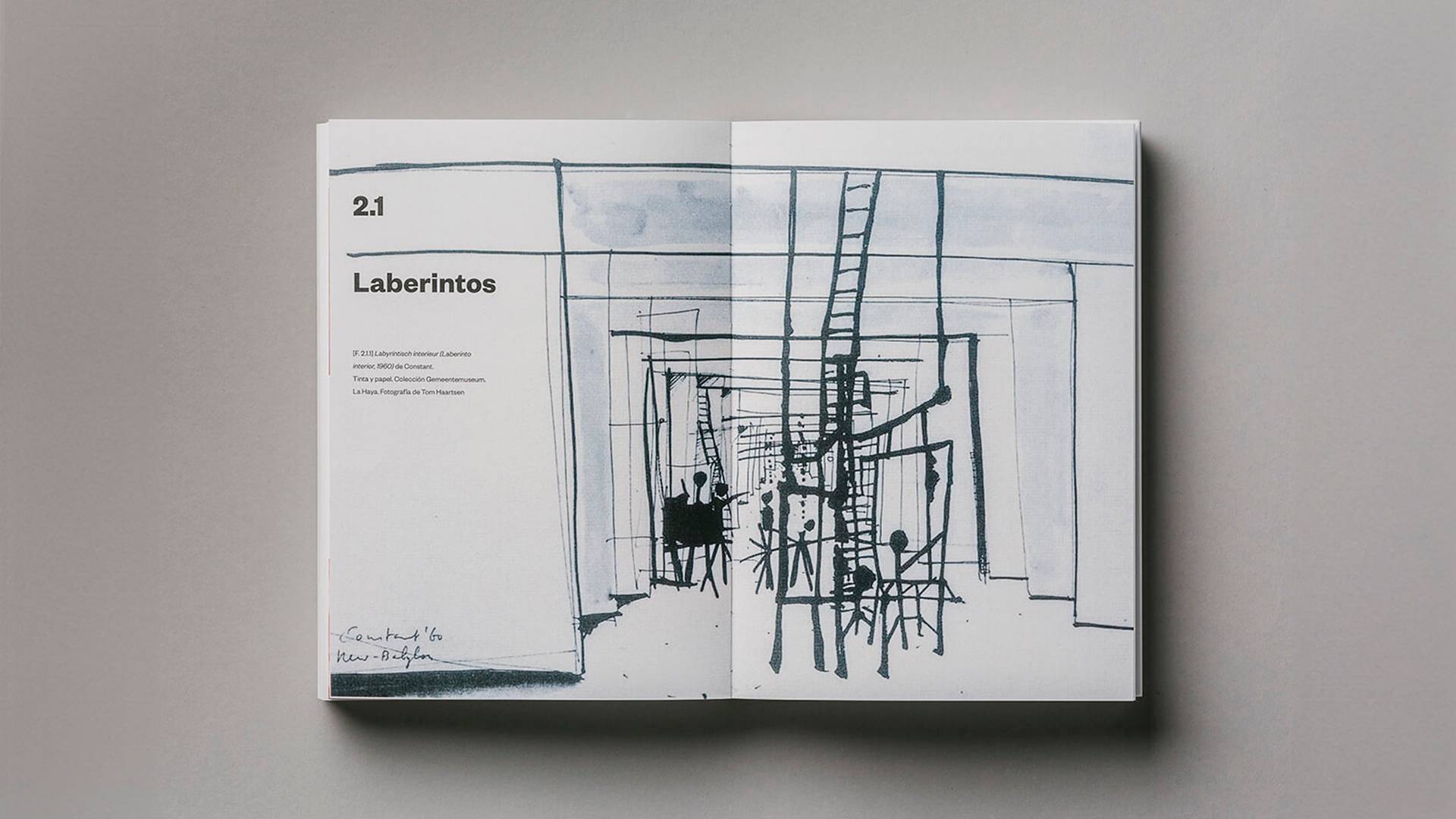
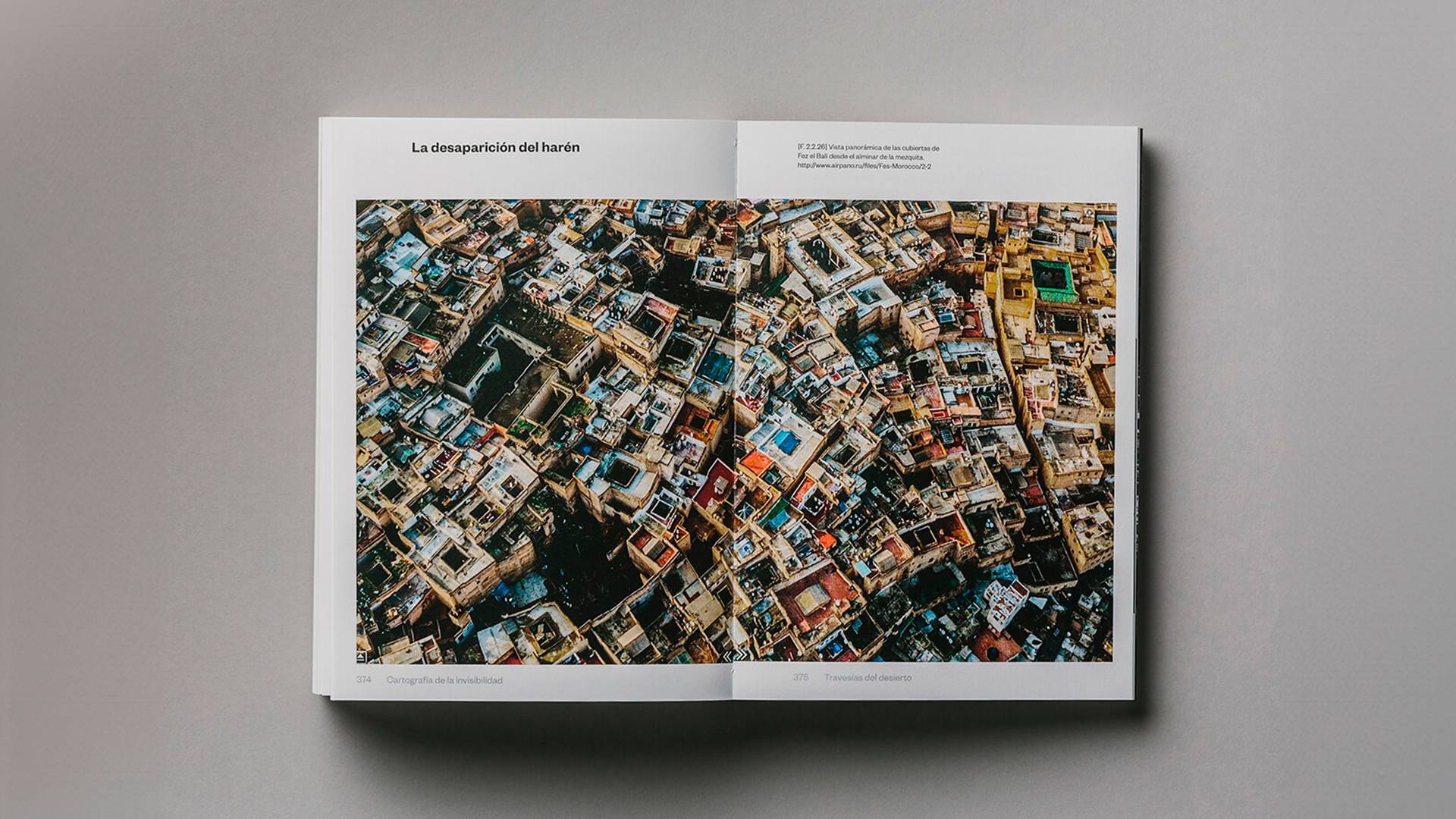
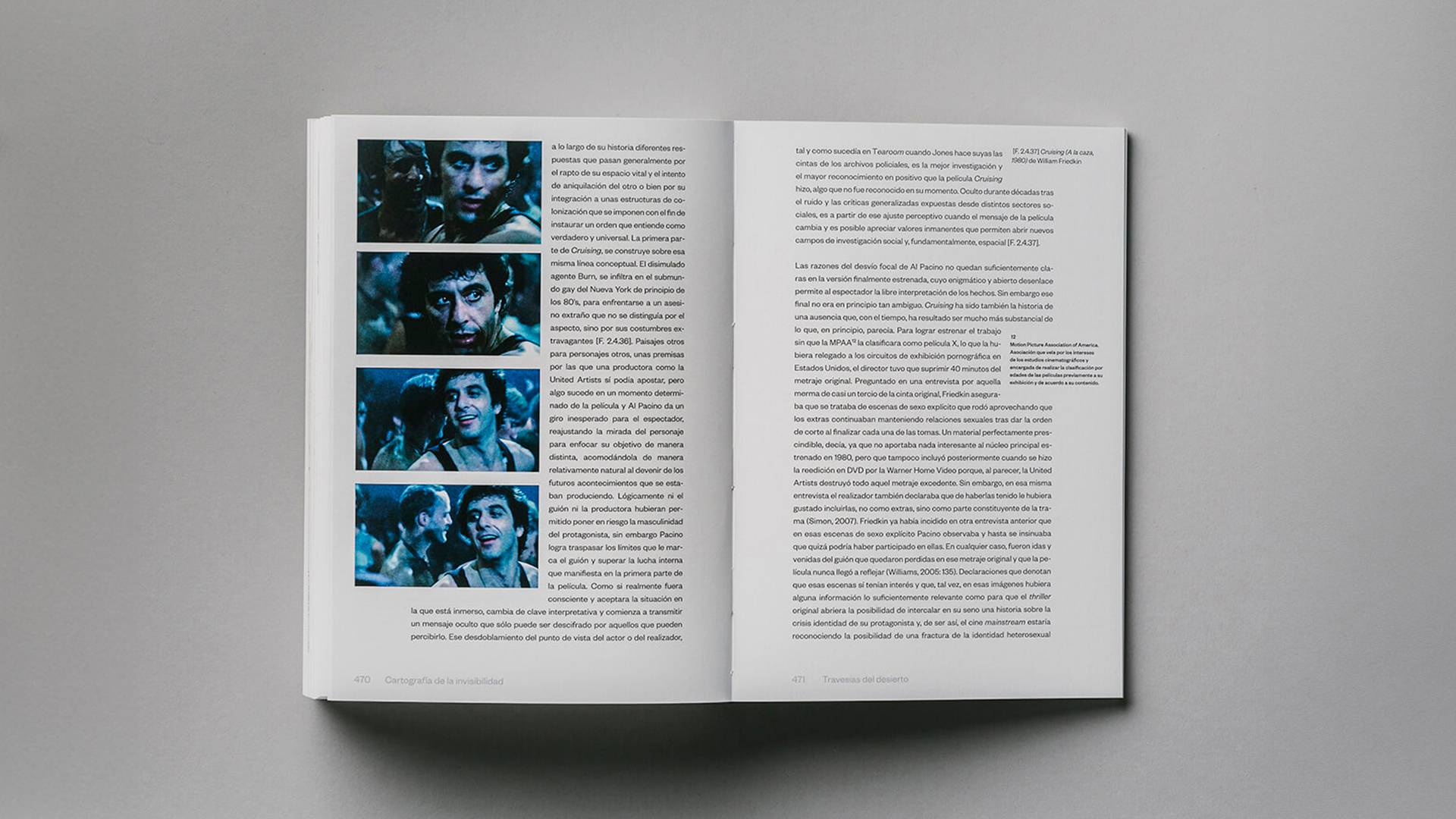
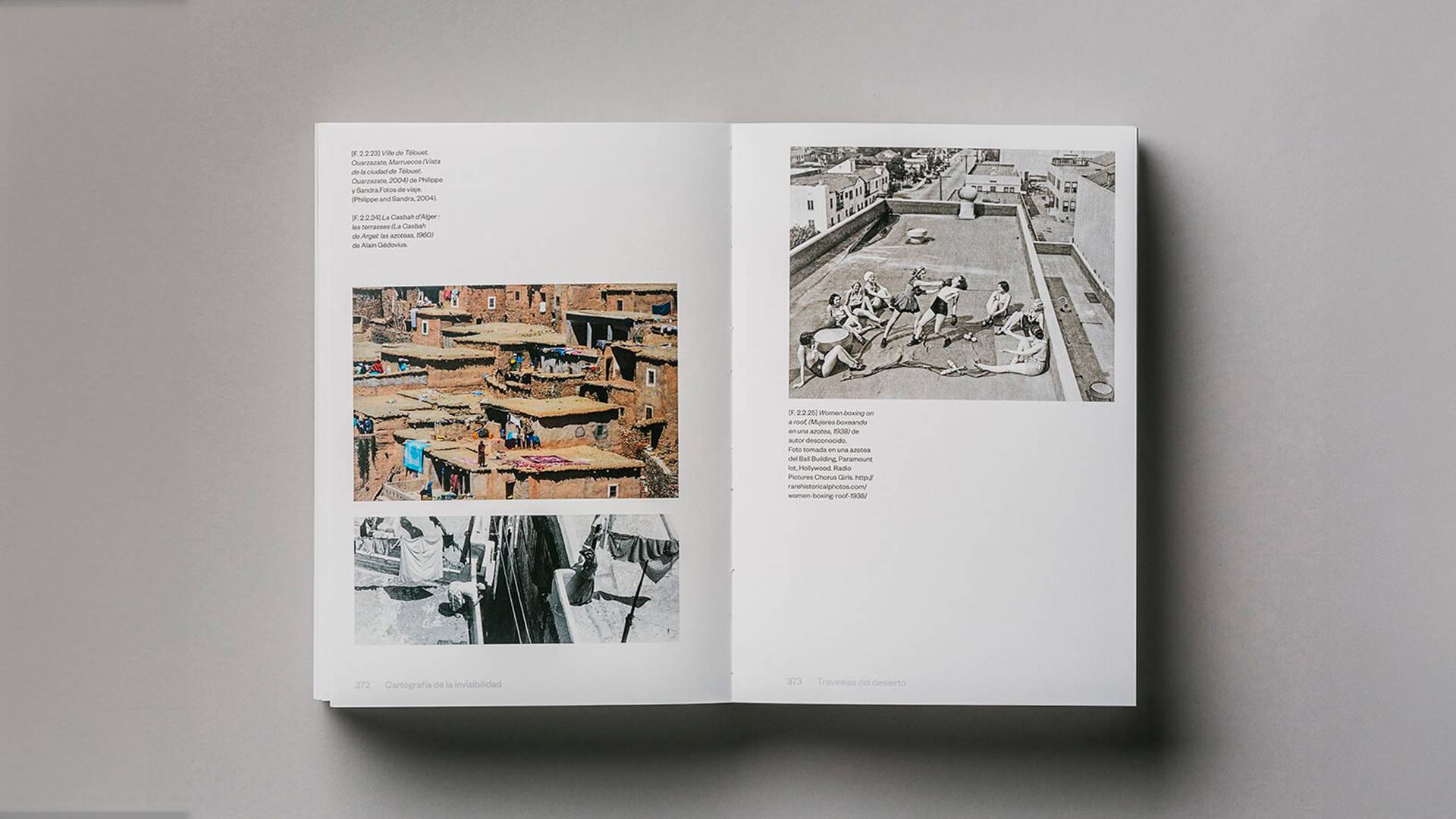
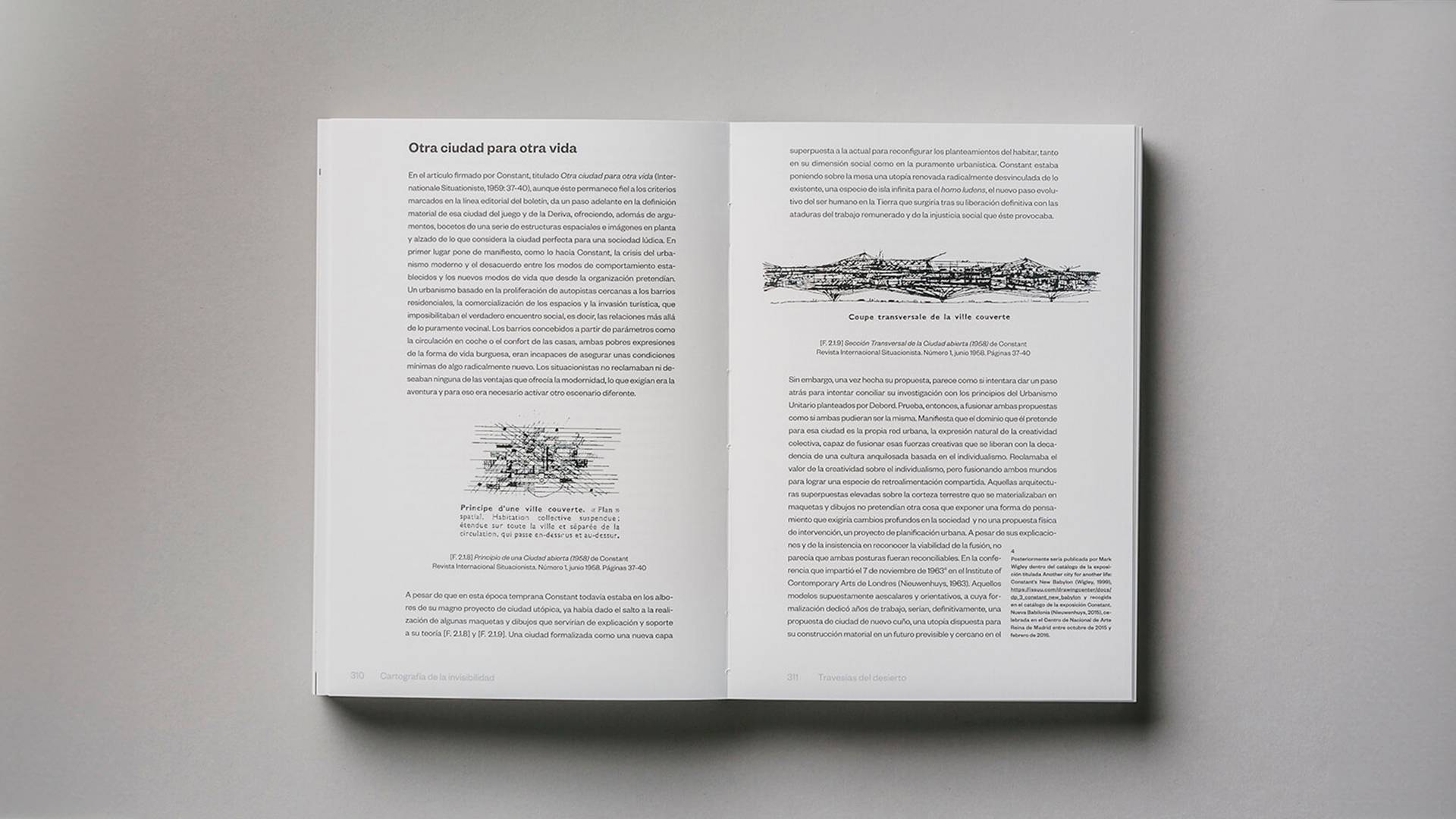
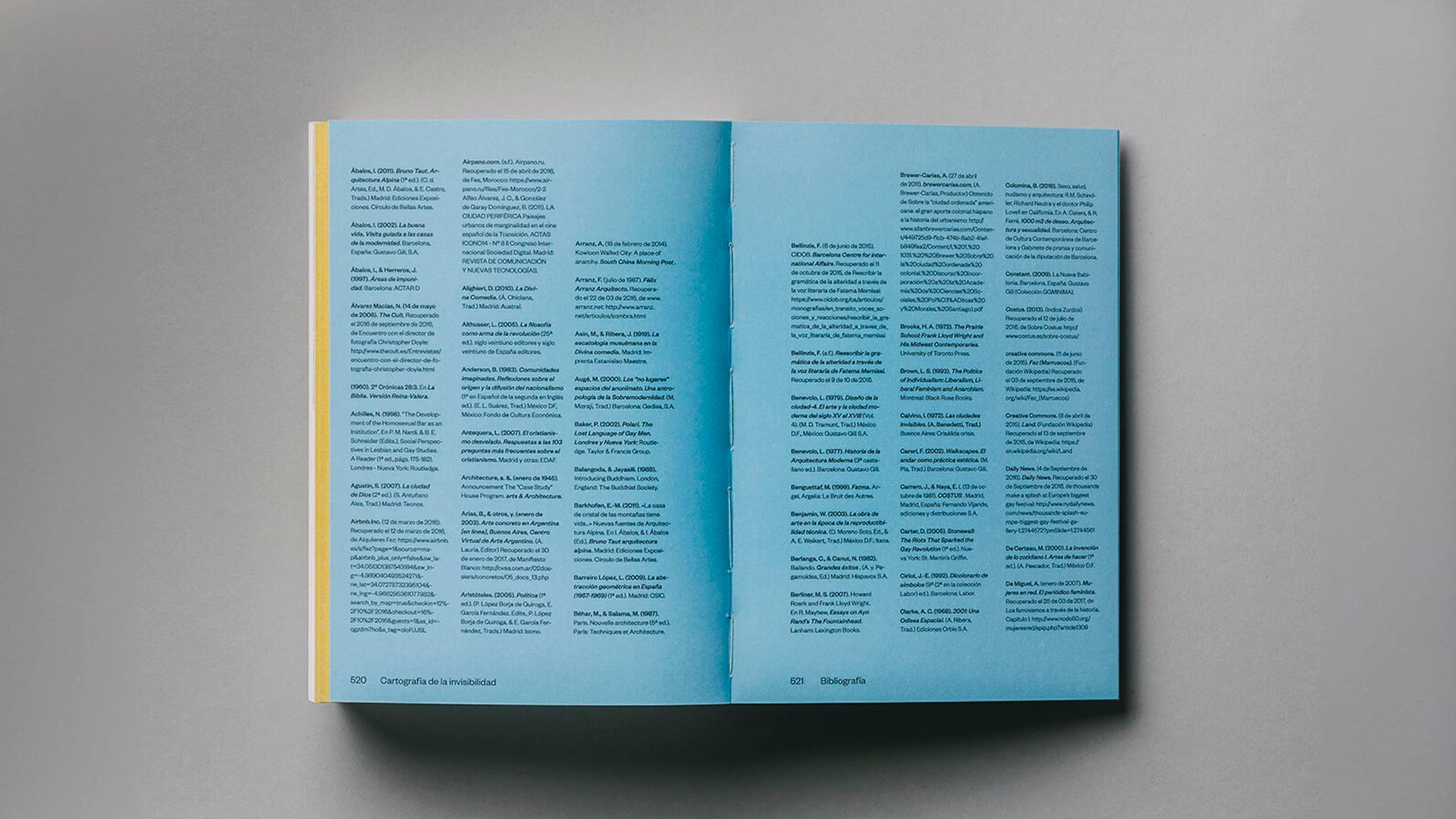
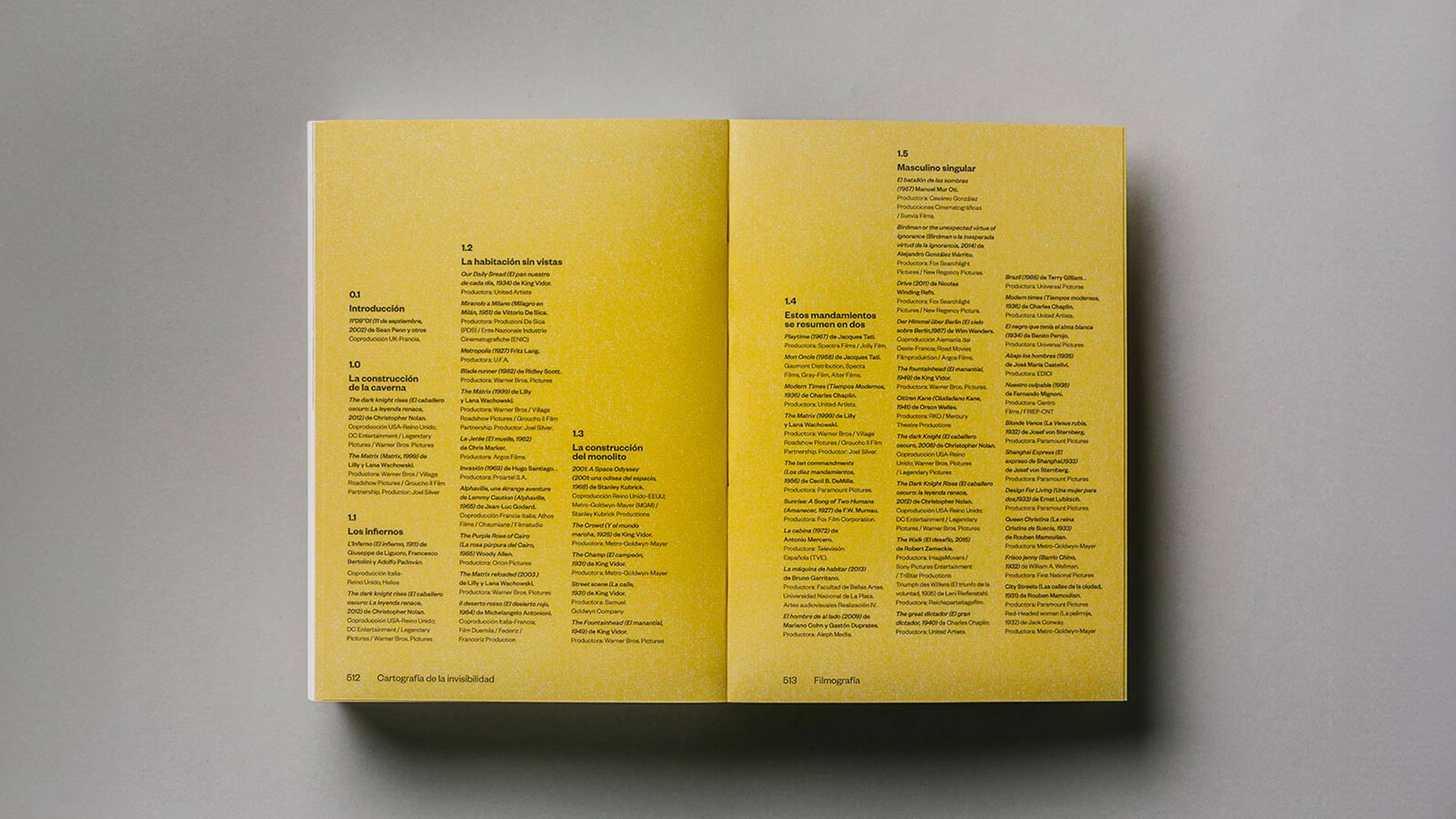
Cartografías de la invisibilidad: two copies of the book with typographic coversCartografías de la invisibilidad: contents spreadCartografías de la invisibilidad: spread from the Laberintos chapter with a drawingCartografías de la invisibilidad: spread with an aerial view of a cityCartografías de la invisibilidad: spread with a grid of film stillsCartografías de la invisibilidad: spread with blue film stills and textCartografías de la invisibilidad: spread with photographs of rooftopsCartografías de la invisibilidad: spread with engravings and textCartografías de la invisibilidad: spread with a full-bleed red imageCartografías de la invisibilidad: text spread with small photographsCartografías de la invisibilidad: spread with photographs of modern buildingsCartografías de la invisibilidad: spread with a plan and an architectural photographCartografías de la invisibilidad: blue text spreadCartografías de la invisibilidad: yellow text spread

To overcome the difficulty of reading its meanings correctly in purely artistic terms, Zevi called for a method of its own: one attentive to architecture's specific nature, allowing a distinct and exclusive interpretation that would capture its essence more sharply. To this end he proposed a series of mechanisms for representing, assessing and assimilating architectural space, grounded in direct experience and in a proper way of seeing. Knowing how to see would be the founding principle for writing a truly modern history of architecture.


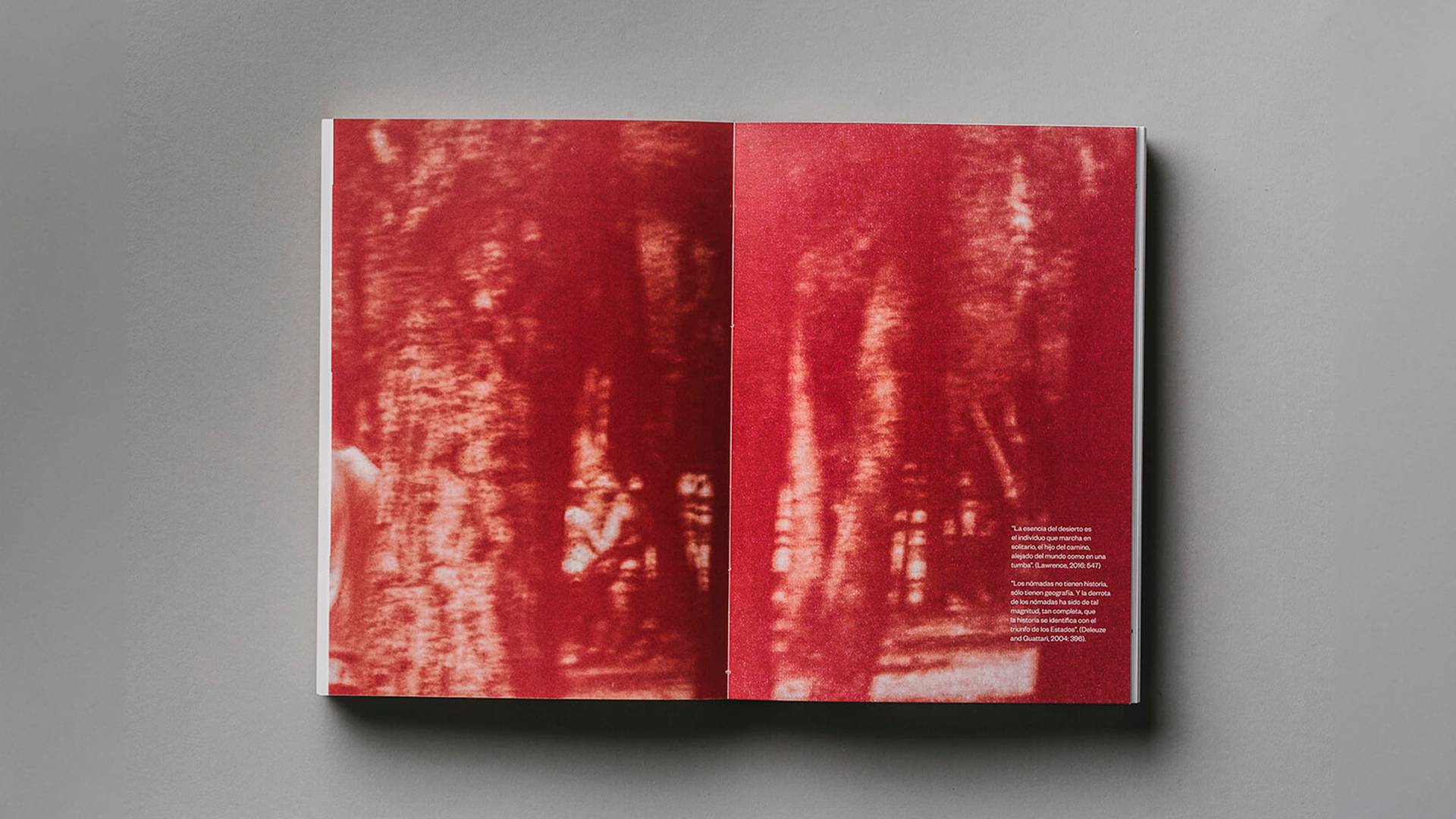
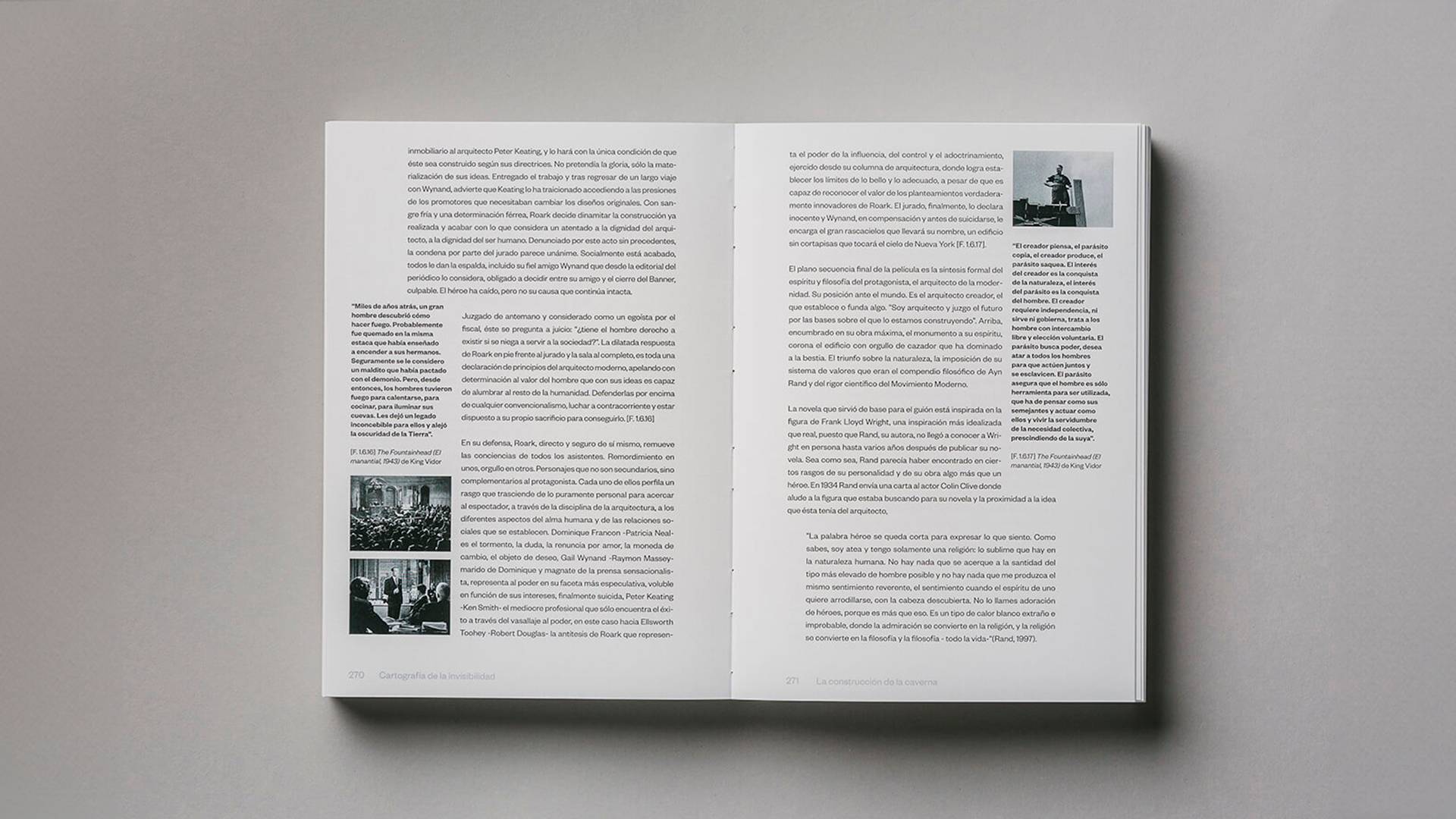
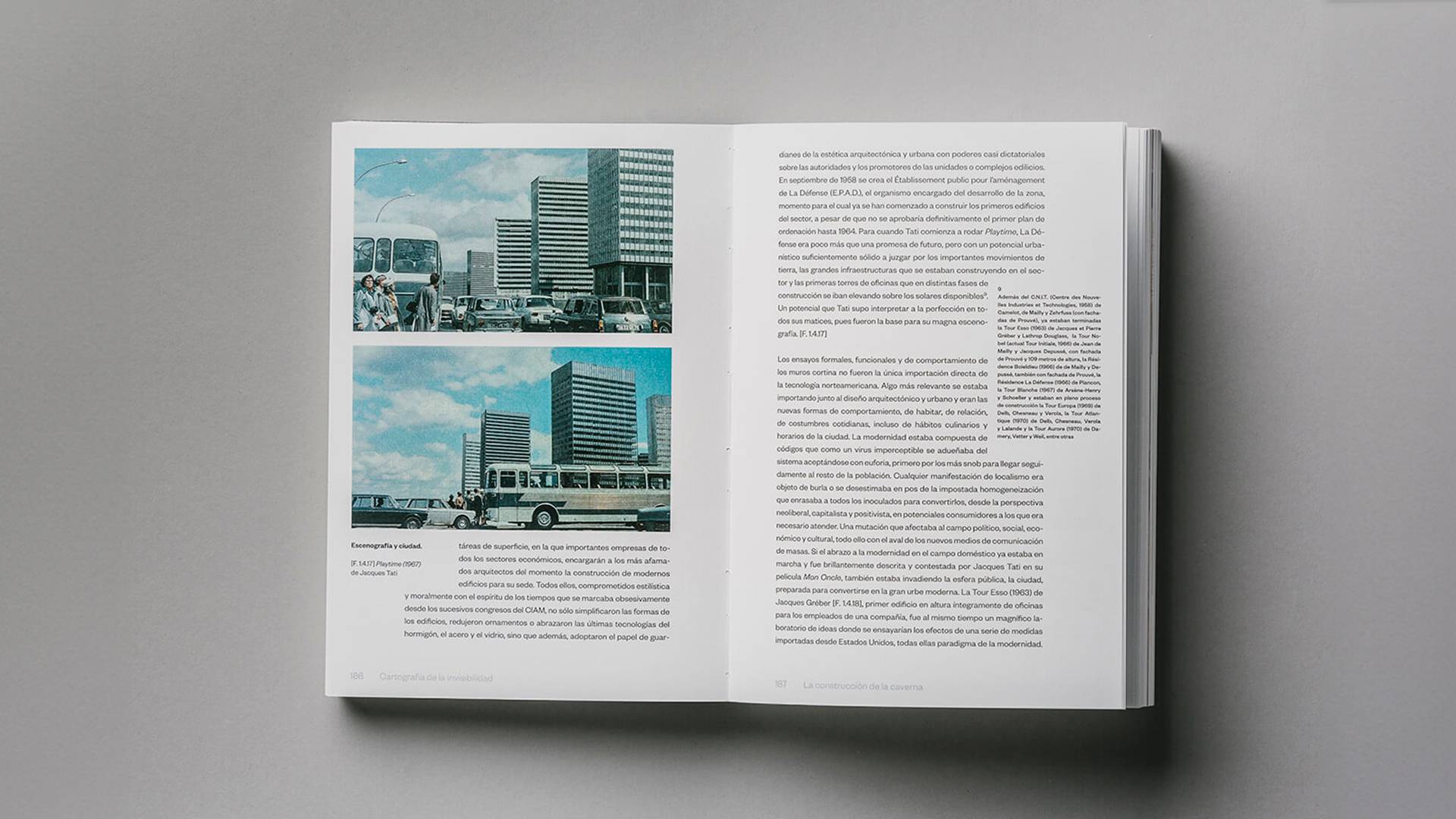
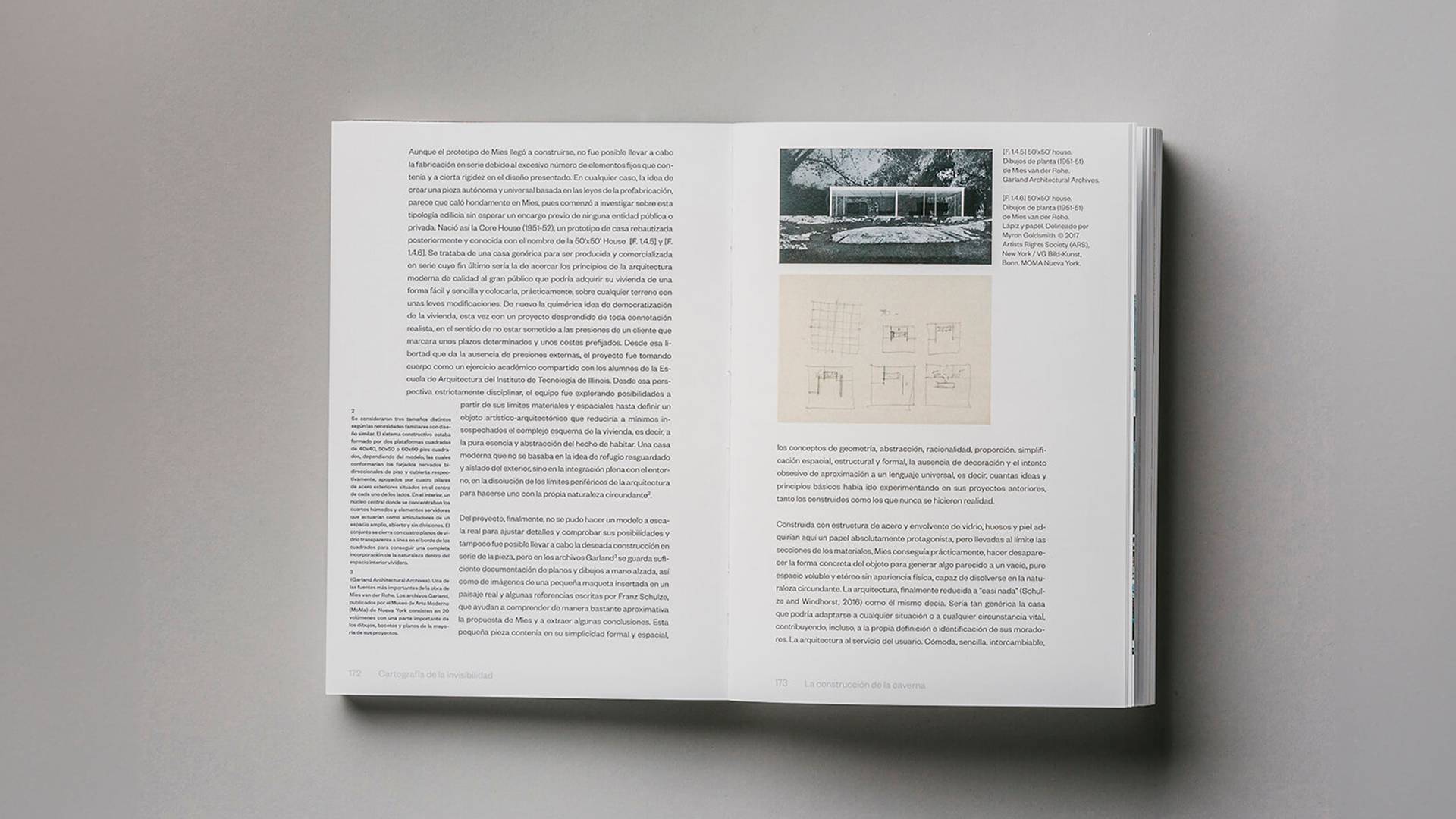
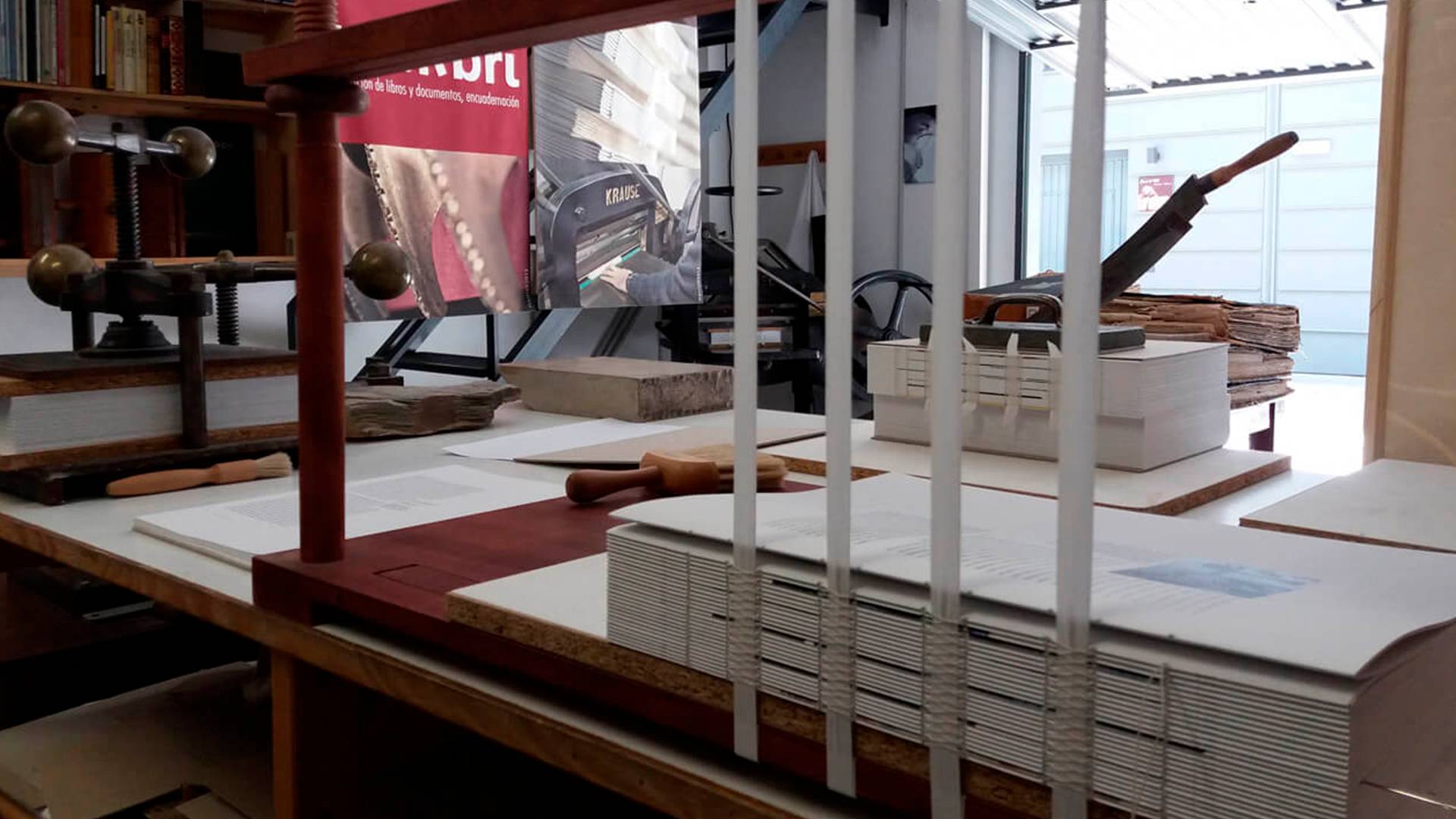
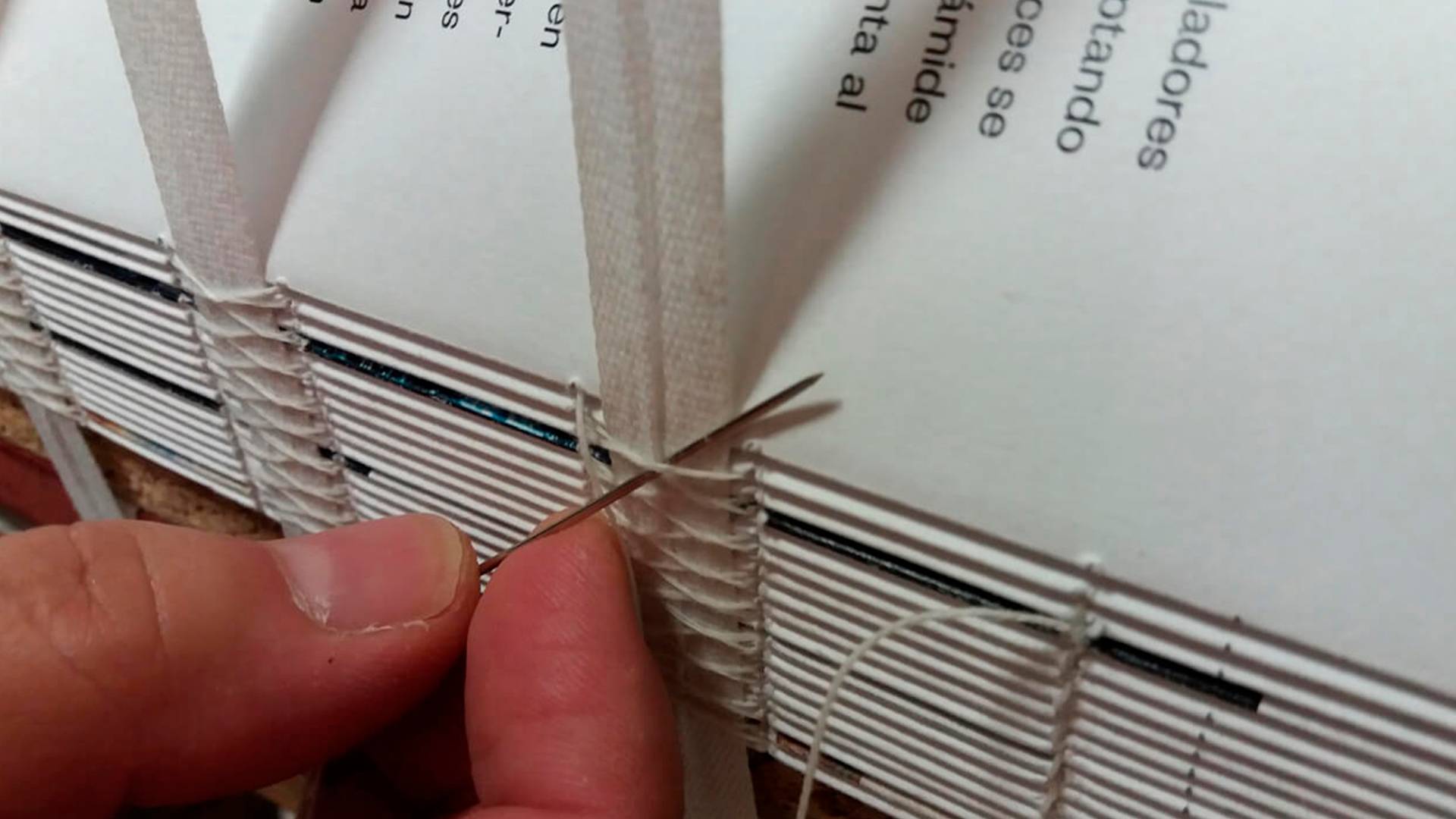
Handcrafted from start to finish, the book crosses paths with its own content. Its layout becomes a kind of collection of found objects that meet on the same page, sometimes in dialogue with one another, sometimes standing alone. Almost hidden, like the invisible cartographies the author describes. 

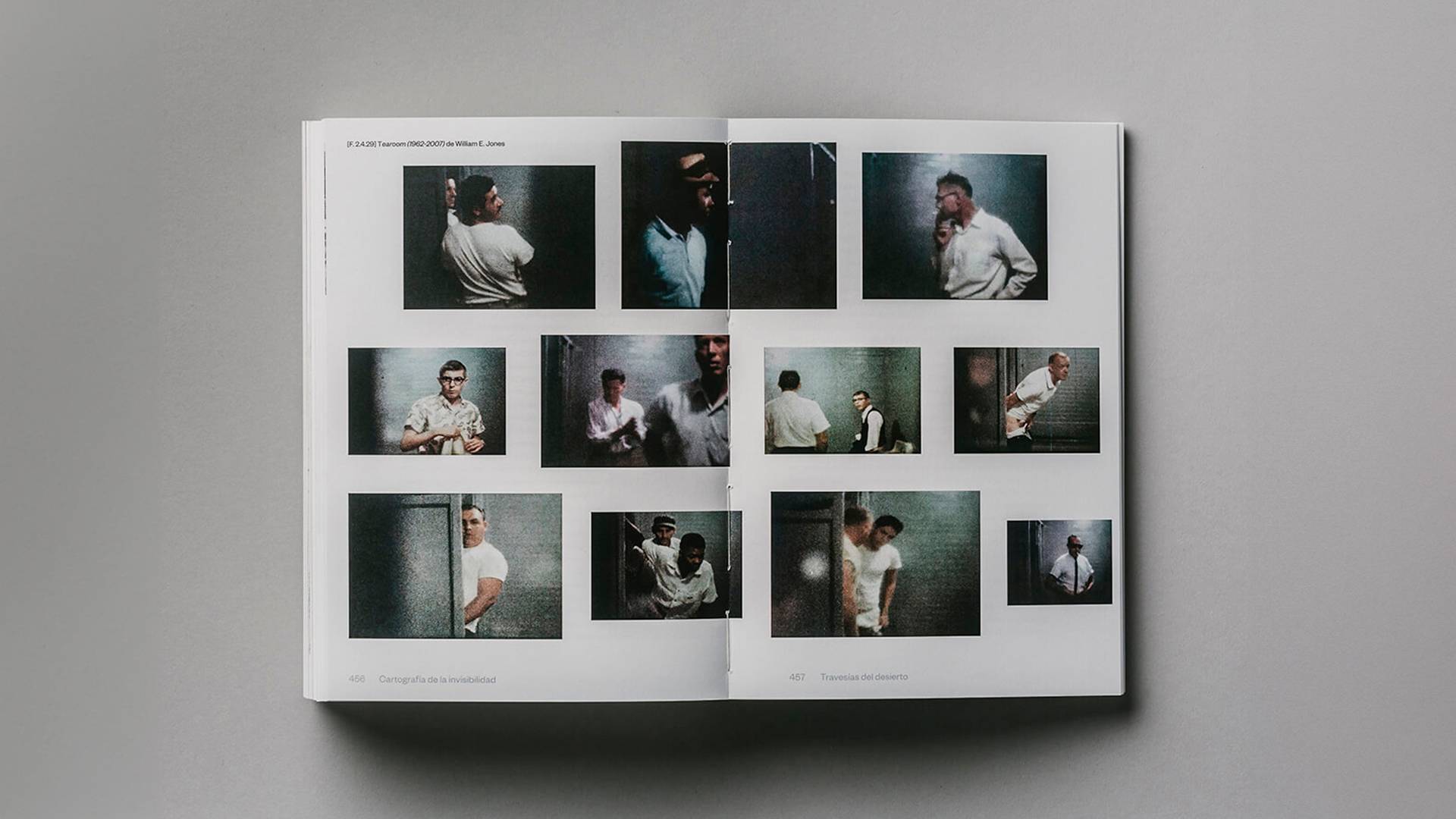
Cartografías de la invisibilidad: spread with a grid of film stills

Using a single typeface family, we stitch and link text and image through author's notes, footnotes, titles, subtitles and every other element the syntax allows, generating the object's own cartography so that its form mirrors its content. The bare, exposed binding also lets us play with modesty: the nakedness of a book that conceals multiple maps.
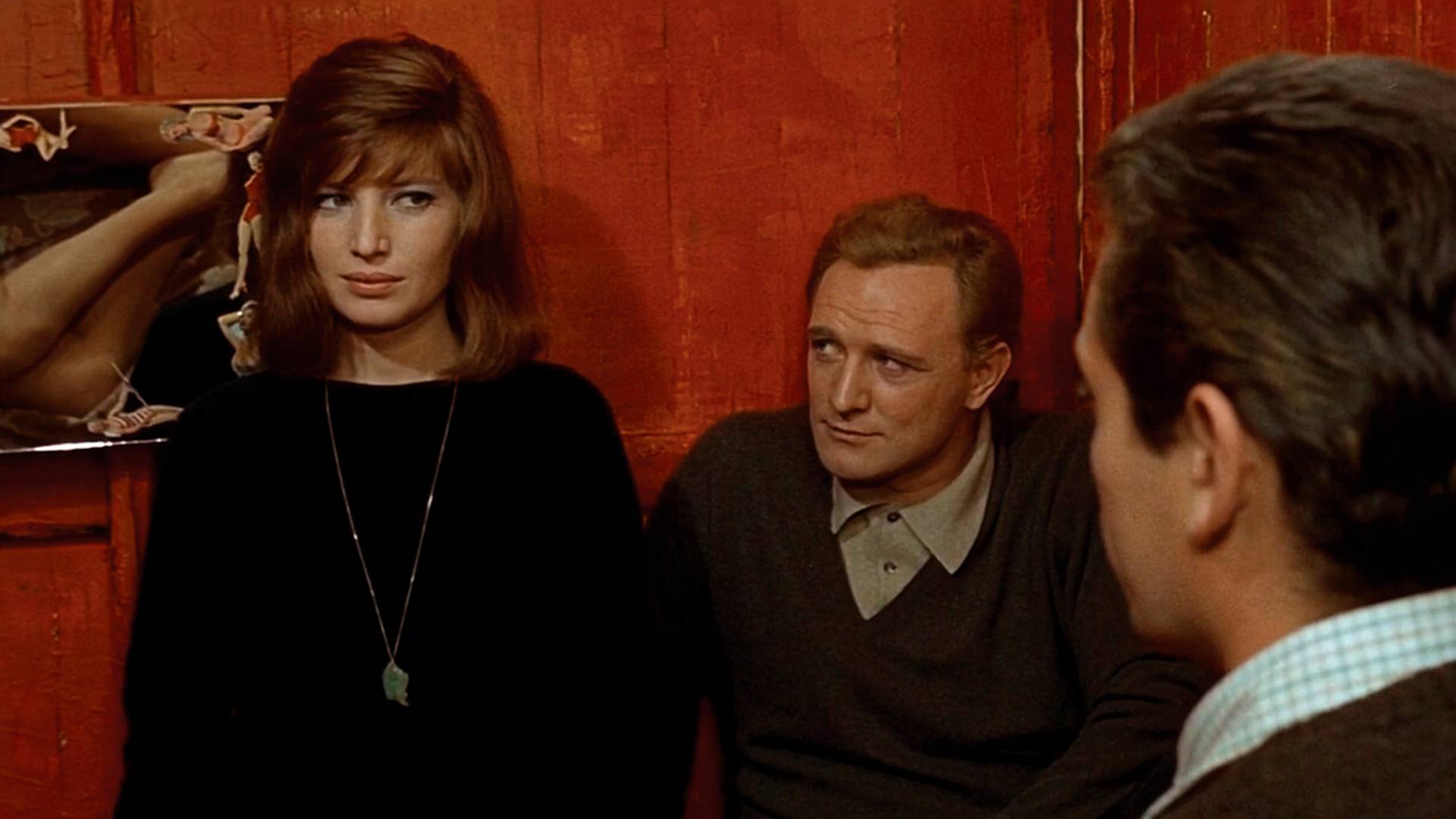
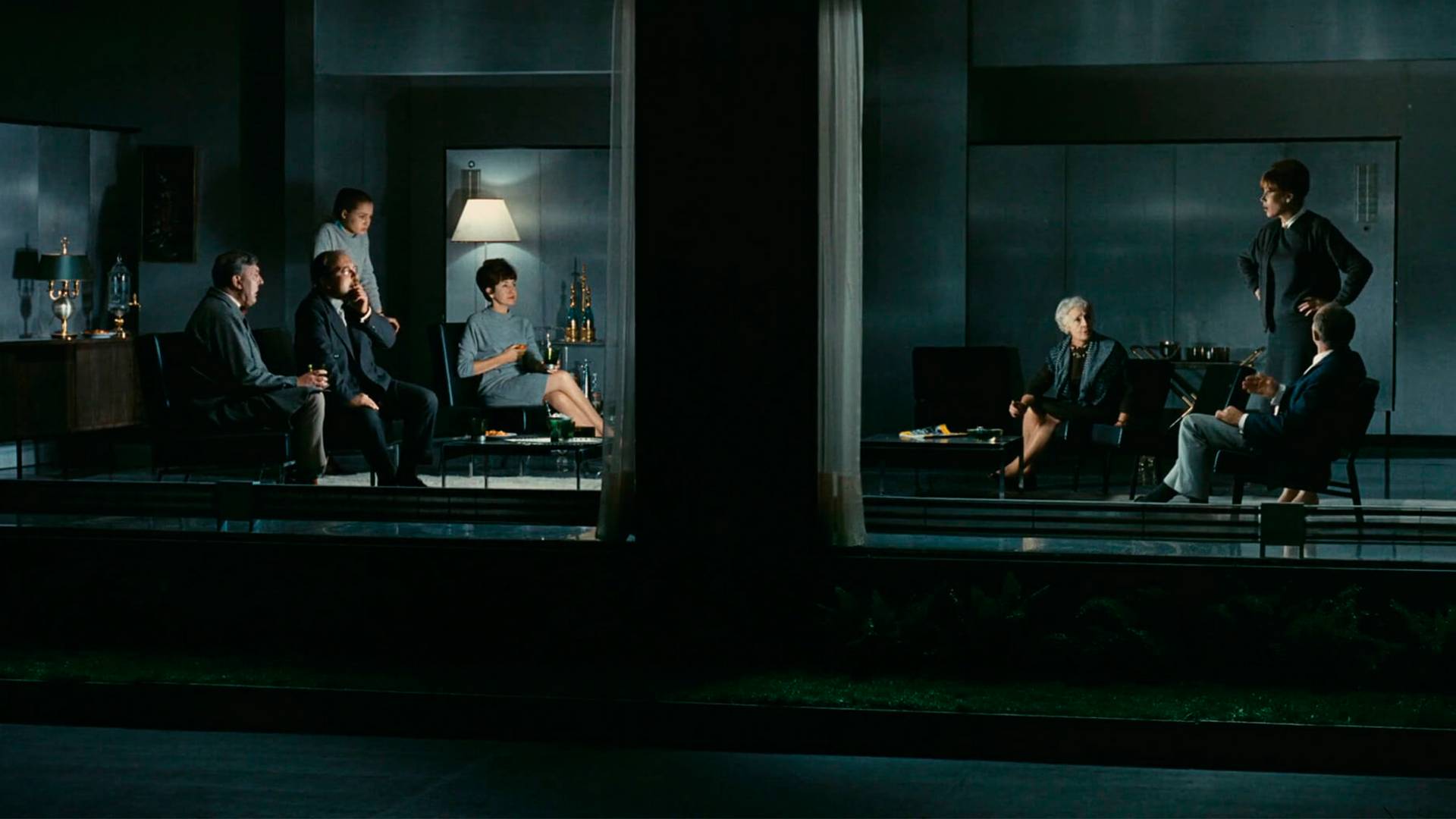
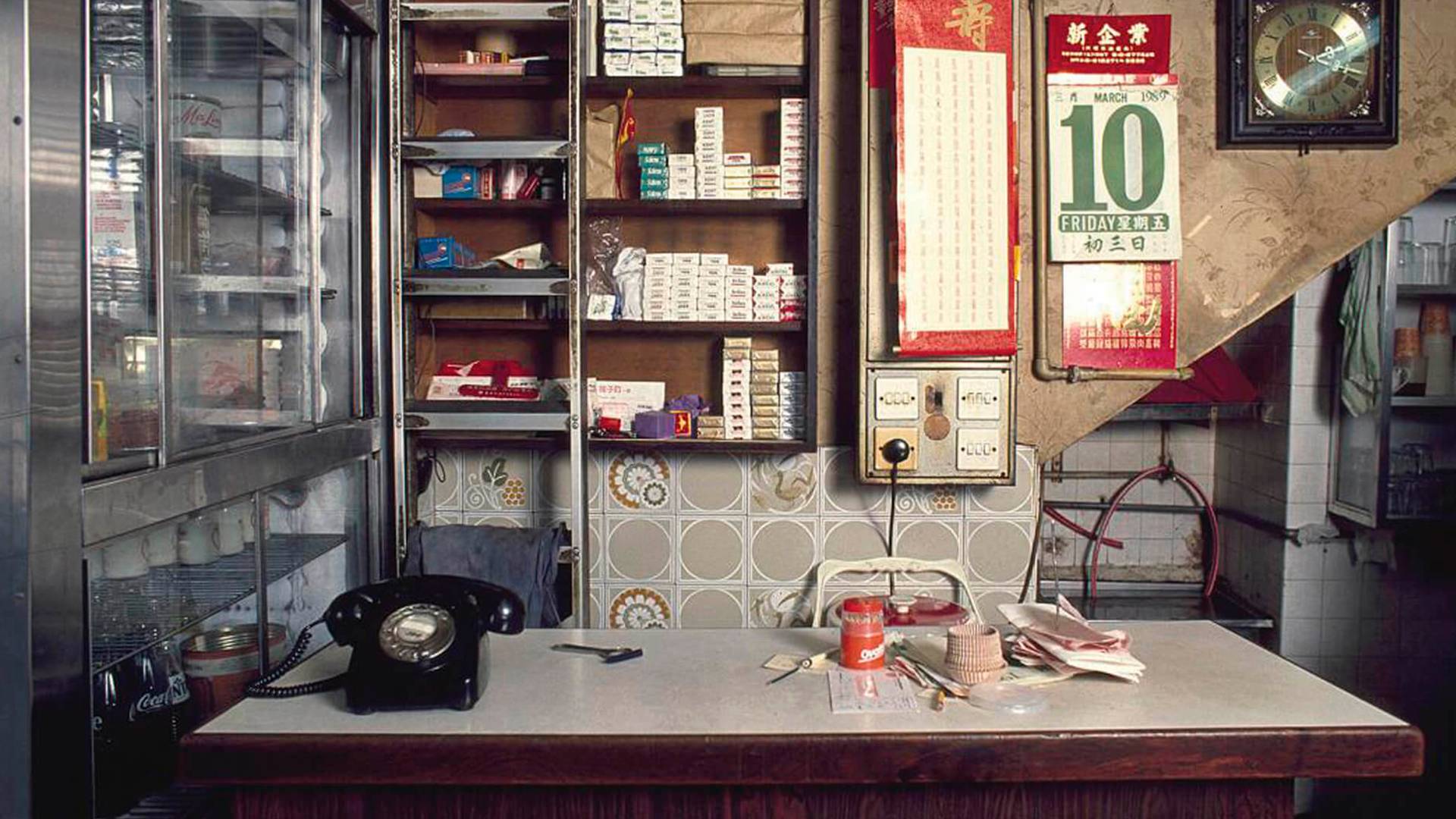
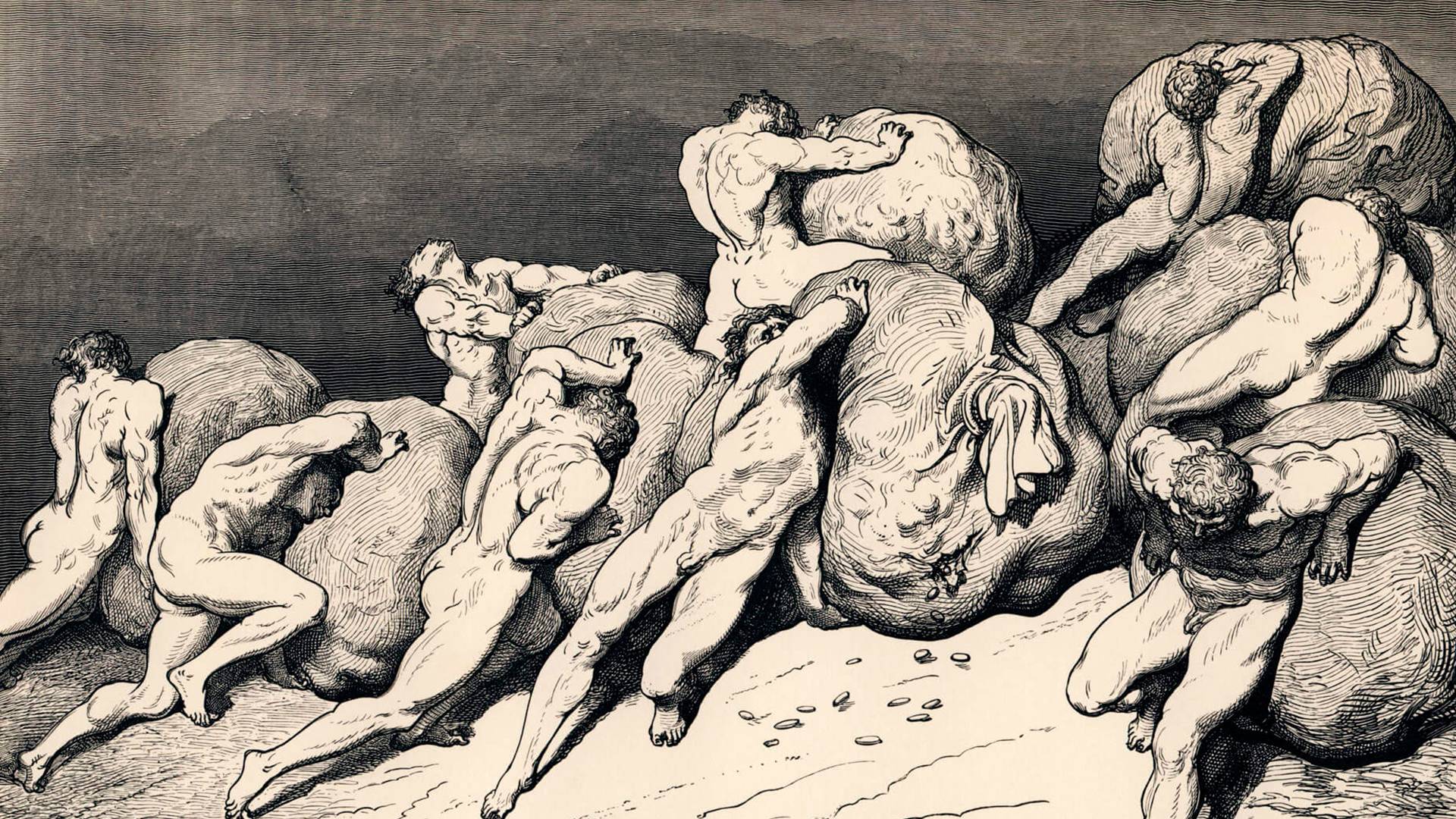
Cartografías de la invisibilidad: night-time film still of a glazed living roomCartografías de la invisibilidad: interior of an old shop with a telephone and calendarCartografías de la invisibilidad: Doré engraving from Dante's Inferno
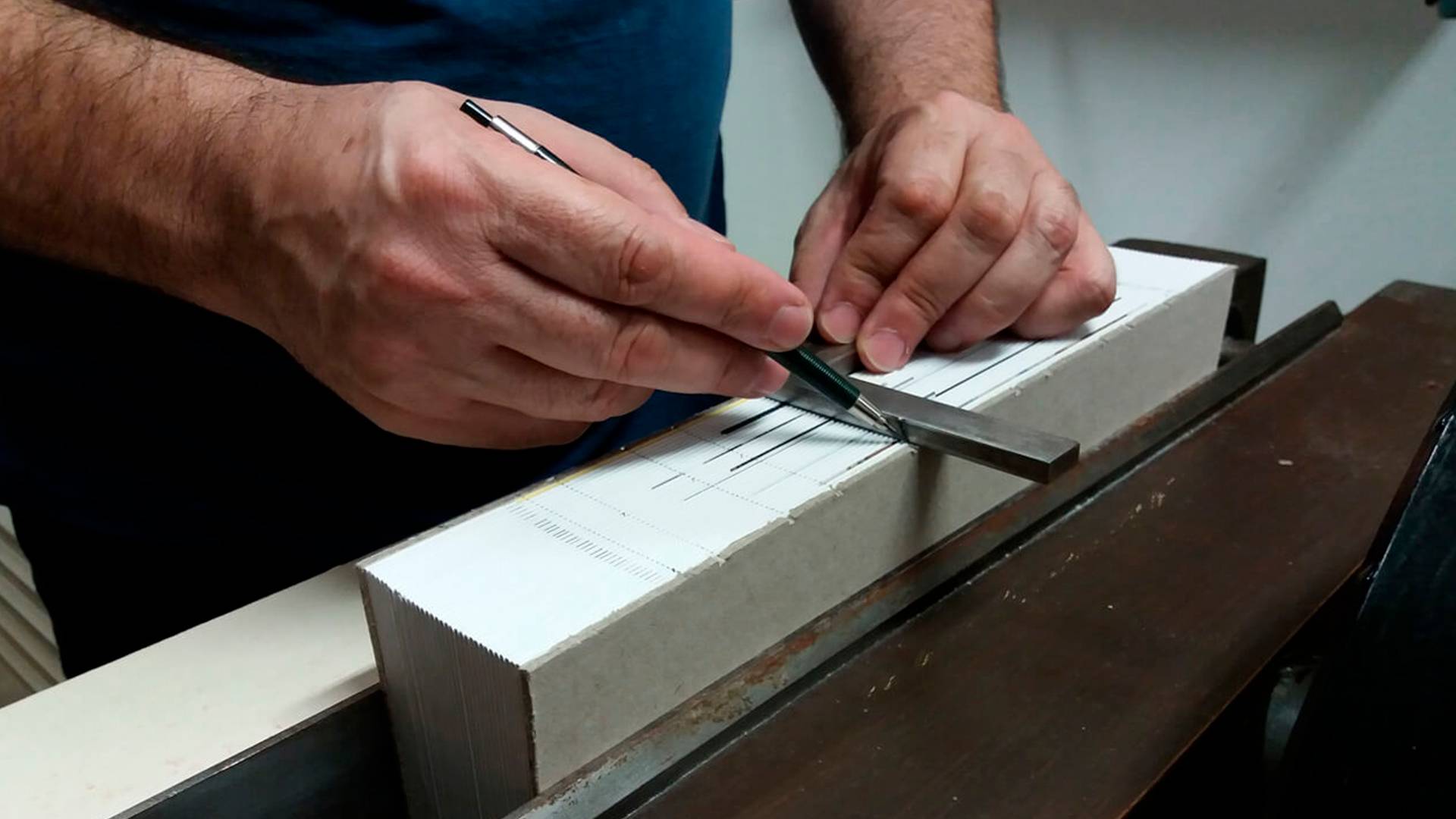
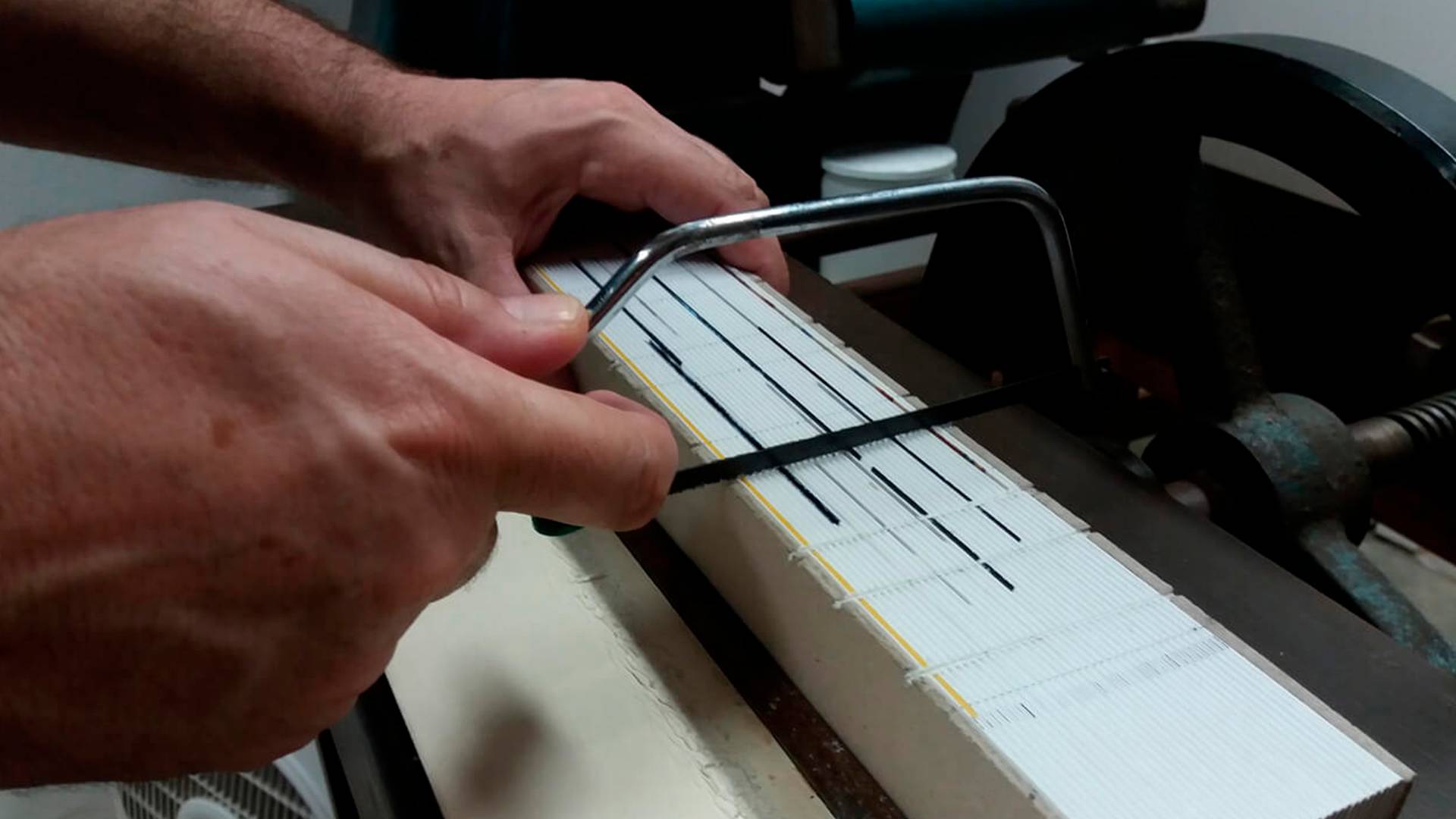
Cartografías de la invisibilidad: bookbinding workshop with folded sheets in the pressCartografías de la invisibilidad: hands marking the spine of the book for sewingCartografías de la invisibilidad: sawing the spine in the bookbinding workshopCartografías de la invisibilidad: hand-sewing the signatures